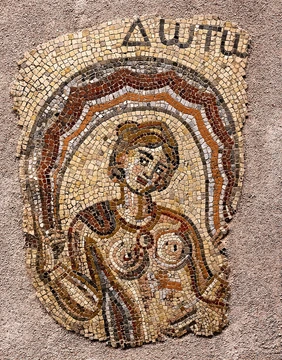
Sciron
Corinthian bandit or Megarian warlord slain by Theseus.
Sciron, also known as Sceiron, Skeirôn, or Scyron, was a figure in Greek mythology, most famously one of the malefactors killed by the hero Theseus on his journey from Troezen to Athens. He was a notorious Corinthian bandit who haunted the frontier between Attica and Megaris, preying on travelers at the Sceironian Rocks. However, some accounts, particularly from Megarian tradition, portray him not as a robber but as a respected warlord and kinsman of heroes.
- also_known_as
- Sceiron, Skeirôn, Scyron
- mythological_role
- Bandit or warlord
- killed_by
- Theseus
- father
- Pelops, Poseidon, Canethus, or Pylas (sources vary)
- mother
- Hippodameia, Iphimedeia, or Henioche (sources vary)
- known_for
- Haunting the Sceironian Rocks; forcing victims to wash his feet before kicking them into the sea to be devoured by a giant turtle
- grandfather_of
- Telamon and Peleus
Lore & Background
Sciron dwelt at the Sceironian Rocks, a cliff on the Saronic coast of the Isthmus of Corinth on Megarian territory. He robbed travelers and forced them to wash his feet at a precipitous place; when they knelt, he kicked them over the cliff into the sea, where a monstrous sea turtle devoured them. As his fourth labor, Theseus slew Sciron by pushing him off the cliff or, according to some, by seizing him by the feet and throwing him into the sea. A group of figures in the pediment of the royal Stoa at Athens depicted Theseus in the act of throwing Sciron into the sea.
According to Plutarch, however, the Megarians claimed Sciron was not a robber but a warlord, a chastiser of robbers, and a kinsman of good and just men. He was son-in-law of Cychreus, father-in-law of Aeacus, and grandfather of Peleus and Telamon. When Pylas was exiled from Megara, Sciron disputed the throne with Nisus but accepted the arbitration of Aeacus, who made Nisus king and Sciron military leader. Sciron then married his daughter Endeïs to Aeacus. In one version, Theseus instituted the Isthmian Games to honor Sciron and made expiation for his murder because they were cousins.
Reader's Guide
Sciron occupies a dual role in Greek mythology, reflecting conflicting local traditions. In the dominant Athenian narrative, he is a brutal bandit whose method of killing—forcing victims to wash his feet before kicking them off a cliff to be eaten by a turtle—marks him as a classic villain of the Theseus cycle. Theseus's slaying of Sciron as his fourth labor reinforces the hero's role as a civilizing force, clearing the road to Athens of dangers. The depiction of this scene in the pediment of the royal Stoa at Athens underscores its cultural importance.
Conversely, the Megarian tradition, preserved by Plutarch, rehabilitates Sciron as a noble warlord and kinsman of heroes like Aeacus, Peleus, and Telamon. This version highlights the political and genealogical rivalries between Athens and Megara, with each city claiming a different legacy for the same figure. The story that Theseus founded the Isthmian Games to atone for killing his cousin Sciron further complicates the narrative, suggesting a ritual or expiatory origin for the games. Ultimately, Sciron's legacy is that of a contested figure, embodying how myth can be shaped by regional identity and political needs.
Did You Know?
- Sciron was the grandfather of the heroes Telamon and Peleus through his daughter Endeis.
- The Sceironian Rocks, where Sciron operated, were named after him according to Ovid's Metamorphoses.
- In one version, Theseus instituted the Isthmian Games to honor Sciron and make expiation for his murder because they were cousins.
- A son of Sciron named Alycus was said to have been slain by Theseus when the latter kidnapped the young Helen.
More in Filicide in mythology 1-24
Spotted an error? Know more?
This is a living reference — every entry is fact-audited, and reader corrections feed straight into our audit queue. Suggest an edit · See this site's audit record