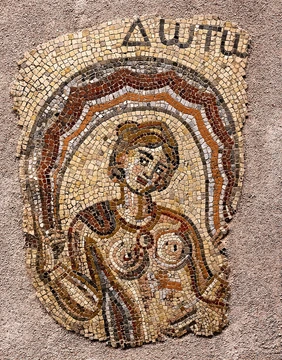
Althaea (mythology)
Queen of Calydon who killed her son Meleager.

Wikipedia / Wikimedia Commons
Althaea, also called Althea or Althaia, was a queen of Calydon in Greek mythology, married to King Oeneus. She is most remembered for her part in the story of the Calydonian boar hunt and for killing her own son, Meleager.
Her father was King Thestius of Aetolia, a son of Ares, making Althaea a Pleuronian princess. Her mother may have been Leucippe or Eurythemis, daughter of Cleoboea. She had two sisters, Leda and Hypermnestra, and several brothers, including Iphiclus, Plexippus, and Eurypylus (though the exact list varies by source). Through Leda, Althaea was aunt to Helen of Troy, Clytemnestra, and Castor and Pollux.
Althaea married Oeneus, and their children included sons Meleager and Toxeus, and daughters Deianeira, Gorge, and Eurymede. Some accounts add other children, but canonical sources like Apollodorus focus on these. Some say Meleager was actually fathered by Ares, and that Ancaeus was her son by Poseidon. Deianeira is sometimes described as a daughter of Dionysus; according to Hyginus, Oeneus first received a vine from Dionysus, but there is no mention of Oeneus permitting an affair or being taught to grow grapes.
Seven days after Meleager’s birth, the three Moirai—Clotho, Lachesis, and Atropos—appeared to Althaea. They told her that her son’s life was tied to a log burning in the hearth: he would live only as long as the brand remained unburned. Althaea took the brand from the fire and hid it, either burying it in the palace or storing it in a chest.
Meleager grew into a respected prince. One spring, Oeneus accidentally omitted Artemis from his first-fruit sacrifices. Angered, the goddess sent a massive boar to ravage Calydon, destroying crops and killing people. Oeneus gathered warriors to hunt it, including Meleager, the huntress Atalanta, and some of Althaea’s brothers (possibly Plexippus and Toxeus). Meleager killed the boar but gave its skin to Atalanta, both because he loved her and because she had struck the animal first and many times. His uncles were furious that he gave the prize to a woman and outsider; they took the skin from Atalanta by force, and Meleager killed them both in retaliation.
When Althaea learned of her brothers’ deaths, she was overcome with grief and rage. She retrieved the hidden brand and threw it into the hearth, killing Meleager. Unable to bear her sorrow, she then committed suicide—either by hanging or stabb
- also_known_as
- Althea, Althaia
- title
- Queen of Calydon
- spouse
- King Oeneus
- father
- King Thestius of Aetolia
- mother
- Leucippe or Eurythemis
- known_for
- Murdering her son Meleager
- siblings
- Leda, Hypermnestra, Iphiclus, Plexippus, Eurypylus (other brothers vary by source)
Lore & Background
Althaea was the daughter of King Thestius of Aetolia, son of Ares, making her a Pleuronian princess. She married Oeneus, king of Calydon, and bore him several sons including Meleager and Toxeus, and daughters Deianeira, Gorge, and Eurymede. Some accounts state that Meleager was the result of a liaison with Ares, and that Ancaeus was her son by Poseidon. Deianeira was sometimes described as the daughter of Dionysus, but Hyginus (Fabulae 129) only says Oeneus first received a vine from Dionysus, not that he permitted an affair or was taught to grow grapes.
Seven days after Meleager's birth, the Moirai (Clotho, Lachesis, and Atropos) appeared and told Althaea that her son's life was bound to a log burning in the hearth; he would live only as long as the brand remained unburned. Althaea snatched the brand from the fire and hid it away. After Meleager killed her brothers in a dispute over the Calydonian boar's hide, Althaea, in grief and rage, threw the brand into the fire, killing her son. She then took her own life. According to Ovid, Meleager's sisters (except Gorge and Deianira) were transformed into guinea fowl, but no canonical source mentions them being relocated to the island of Leros.
Reader's Guide
Althaea's significance in Greek mythology lies in her role as a mother whose vengeance against her son for killing her brothers leads to his death and her own suicide. The story, preserved in multiple versions, illustrates themes of fate, familial loyalty, and the consequences of wrath. The myth of the brand—where Meleager's life is tied to a piece of wood—is a classic example of a life-token motif, common in folklore. Althaea's actions, whether by burning the brand or by cursing her son, highlight the tension between maternal love and the demand for blood vengeance. Her story is referenced in works by Homer, Ovid, Hyginus, and others, and it appears in compilations such as Bulfinch's Mythology. The tale also connects to the broader Calydonian boar hunt narrative, involving figures like Atalanta and Meleager, and explains the origin of the Meleagrids, the sisters transformed into birds. Althaea remains a figure of tragic agency, whose choice to end her son's life ultimately destroys her as well.
Did You Know?
- After Meleager's death, all his sisters except Gorge and Deianira were transformed into birds by Artemis?
- In Homer's Iliad, Althaea prayed to Hades and Persephone for revenge, but Meleager's death is not described in that epic—he does not fall in battle there.
Frequently Asked Questions
Who is Althaea (mythology)?
Althaea (also rendered Althea or Althaia) was a Pleuronian princess and queen of Calydon in Greek myth, wed to King Oeneus. She is best remembered for her central role in the Calydonian boar narrative and for the act of killing her own son, Meleager.
What is Althaea's role in the Calydonian boar hunt?
As queen of Calydon, Althaea's son Meleager was the one who led the company of heroes against the destructive Calydonian boar. Her story is inseparable from that hunt because the bitter dispute over its spoils is the direct catalyst for her subsequent act of filicide.
How does Althaea's story end?
In the aftermath of the boar-hunt quarrel, Althaea destroyed the fated log (or stalk) whose burning was bound to her son Meleager's life, thereby killing him. This act of matricidal reversal—mother slaying child—stands as the tragic and definitive conclusion of her myth.
Why is Althaea important in Greek mythology?
She is one of the most prominent examples of filicide in the Greek mythic canon, as she is the mother who takes her own son's life. Her genealogy also links her to major figures: through her sister Leda she was aunt to Helen of Troy, and her father was Thestius, a son of Ares.
What is the connection between Althaea and Meleager?
Meleager was Althaea's son, born of her union with King Oeneus, and he grew into the hero who slew the Calydonian boar. The myth holds that his lifespan was tethered to a piece of wood, and Althaea's destruction of that wood in a moment of grief or fury is what ends his life.
More in Filicide in mythology 1-24
Spotted an error? Know more?
This is a living reference — every entry is fact-audited, and reader corrections feed straight into our audit queue. Suggest an edit · See this site's audit record