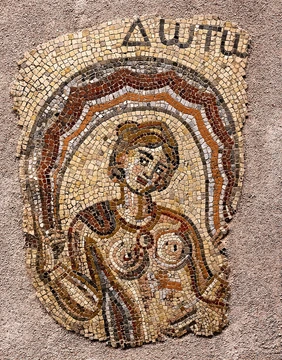
Cercyon of Eleusis
Notorious king of Eleusis, cruel to daughter and strangers.

Wikipedia / Wikimedia Commons
Cercyon (Ancient Greek: Κερκύων, romanized: Kerkúōn) is a figure in Greek mythology, known as a notorious king of Eleusis. He was famous for his cruelty toward his daughter, Alope, and toward anyone who refused to fight him, and was described as a very strong man.
- culture
- Greek
- field
- Mythology
- known_for
- Cruelty to his daughter Alope and to strangers; defeated by Theseus in wrestling
- notable_offspring
- Alope; in the Suda, father of Ekphantos
Lore & Background
Cercyon was a king of Eleusis, described as very strong. His parentage varies: according to different versions, he was son of Poseidon and one of the daughters of Amphictyon (and thus half-brother of Triptolemus), or of Branchus and the nymph Argiope, or of Hephaestus. He had one child, Alope, though the Suda calls him father of Ekphantos, ancestor of the epic poet Musaeus.
Cercyon's cruelty is shown in his treatment of his daughter Alope. After Alope had an affair with (or was raped by) Poseidon, she bore a child and exposed it. The child was nursed by a mare, found by shepherds, and eventually brought before Cercyon, who recognized the child's royal garments. When Alope's nurse revealed the truth, Cercyon ordered Alope imprisoned and buried alive, and the child exposed again. The child was again saved by a mare and shepherds, and named Hippothous. Poseidon turned Alope's body into a fountain near Eleusis.
Cercyon also treated strangers wickedly, challenging passers-by to wrestling matches and killing the losers. He promised his kingdom to anyone who could beat him. In his fifth labor, Theseus defeated and killed Cercyon by lifting him and dashing him to the ground, winning through skill rather than brute strength. This event was said to have started the sport of wrestling. Afterward, Theseus gave the kingdom to Hippothous, who asked for his grandfather's realm.
Reader's Guide
Cercyon of Eleusis is a mythological figure whose significance lies in his role as an antagonist to the hero Theseus and as a cautionary example of cruelty. His story illustrates themes of divine punishment and the eventual triumph of justice through skill over brute force. The myth of his daughter Alope, who was buried alive for bearing Poseidon's child, highlights the harshness of his rule and the intervention of the gods, as Poseidon transformed her into a fountain. Cercyon's death at the hands of Theseus, who used wrestling skill rather than strength, is credited in myth with founding the sport of wrestling. The wrestling-school of Cercyon, located near Eleusis on the road to Megara, became a place associated with the story. His legacy also includes the transfer of his kingdom to his grandson Hippothous, a son of Poseidon, linking the line to Theseus, who claimed the same divine parentage. Cercyon's narrative, preserved in sources such as Apollodorus, Bacchylides, and Pausanias, remains a key episode in the Theseus cycle.
Did You Know?
- Cercyon's daughter Alope was buried alive after her nurse revealed she had borne a child by Poseidon.
- The child of Alope and Poseidon, Hippothous, was nursed by a mare after being exposed twice.
- Theseus killed Cercyon by lifting him and dashing him to the ground, winning through skill rather than strength.
- According to the Suda, Cercyon was the father of Ekphantos, an ancestor of the epic poet Musaeus.
Frequently Asked Questions
Who is Cercyon of Eleusis?
Cercyon is a king of Eleusis in Greek mythology, best remembered as a physically powerful ruler who meted out brutal punishment to anyone who declined to wrestle him. He is also infamously linked to the fate of his own daughter, Alope.
What is Cercyon's act of filicide?
Cercyon is identified as a filicide because of his lethal cruelty toward his daughter Alope, who in the myth gave birth to a child fathered by Poseidon. His rage over her perceived transgression led him to kill her, making him a recurring example of a parent destroying their child in Greek myth.
What are Cercyon's defining traits and role?
He is portrayed as a man of extraordinary physical strength who enforced his dominance through mandatory wrestling contests. Beyond his brute force, his defining trait is a merciless, authoritarian temperament directed at both strangers and his own family.
How does Cercyon's story end?
Cercyon is ultimately defeated in a wrestling match by the hero Theseus. His death at the hands of a younger, stronger challenger underscores the mythic pattern of tyrannical old kings being overthrown by heroic successors.
Why is Cercyon important in the broader mythological canon?
He serves as a cautionary archetype of parental tyranny and the abuse of royal power in Eleusinian tradition. His lineage also connects him to other figures, such as Alope and, per the Suda, a son named Ekphantos, weaving him into wider genealogical networks.
More in Filicide in mythology 1-24
Spotted an error? Know more?
This is a living reference — every entry is fact-audited, and reader corrections feed straight into our audit queue. Suggest an edit · See this site's audit record