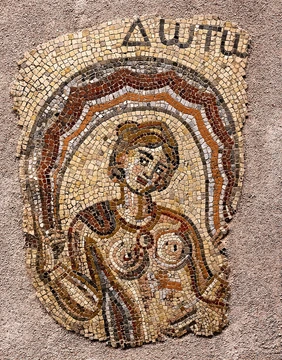
Athamas
Boeotian king whose family suffered tragic divine vengeance.

Wikipedia / Wikimedia Commons
Athamas was a Boeotian king in Greek mythology, formerly a Thessalian prince. He is known for his complex family relationships and tragic mythological episodes, including the near-sacrifice of his children Phrixus and Helle, his madness sent by Hera, and the deaths of his sons Learchus and Melicertes.
- known_for
- Father of Phrixus and Helle; madness and killing of his son Learchus; husband of Nephele, Ino, and Themisto
Lore & Background
Athamas was the son of King Aeolus and Enarete, and brother to several notable figures including Sisyphus and Salmoneus. He first married the goddess Nephele, who bore him twins Phrixus and Helle, and a second son Makistos. After Nephele's departure, he married Ino, daughter of Cadmus, with whom he had Learchus and Melicertes. Later, after Ino's death or departure, he married Themisto, daughter of Hypseus, who bore him Schoeneus and Leucon (and sometimes Erythrius).
Ino, hating her stepchildren Phrixus and Helle, plotted to destroy them by roasting the town's crop seeds and bribing an oracle to demand Phrixus's sacrifice. Athamas reluctantly agreed, but Nephele sent a golden ram to rescue the twins. Helle fell into the Hellespont and died, while Phrixus reached Colchis and gave the king the golden fleece. Later, Hera drove Athamas mad for raising Dionysus, and in his insanity he killed Learchus; Ino then threw herself and Melicertes into the sea, becoming marine divinities.
Before these events, Themisto, jealous of Ino, plotted to kill Ino's children. Ino, however, switched the children's clothes, leading Themisto to mistakenly kill her own children instead. After the deaths of Learchus and Melicertes, Athamas was guided by an oracle to settle where wild beasts would host him, which he found in Phthiotis when wolves left him sheep bones. Athamas was succeeded in Boeotia by his son Leucon or another of his sons, not by Presbon, who was a son of Phrixus and Chalciope.
Reader's Guide
Athamas is a significant figure in Greek mythology primarily for his role in the story of the Golden Fleece, which became central to the later myth of Jason and the Argonauts. His family's tragedies illustrate common mythological themes of divine jealousy, human sacrifice, and madness inflicted by gods. The tale of Phrixus and Helle's escape on the golden ram explains the naming of the Hellespont, while Ino and Melicertes' transformation into sea deities Leucothea and Palaemon shows how mortals could become worshipped figures. Athamas's own madness and subsequent exile reflect the harsh consequences of offending Hera. His multiple marriages and numerous offspring, including the founding of the Athamanian people, connect him to broader genealogical and geographical myths of Boeotia and Thessaly. The conflicting versions of his story—such as whether Ino killed Melicertes out of madness or revenge—preserve the fluid nature of oral tradition. Overall, Athamas serves as a cautionary example of how divine interference could unravel a royal house, and his legacy endures through the lasting cultural references to the golden fleece and the Hellespont.
Did You Know?
- Athamas was the brother of Sisyphus, Salmoneus, and Cretheus.
- His first wife was the goddess Nephele, who sent a golden ram to rescue their children Phrixus and Helle.
- Helle fell off the golden ram into the sea, which was later named the Hellespont after her.
- After killing his son Learchus in madness, Athamas fled Boeotia and settled in Phthiotis, where wolves left him sheep bones.
Frequently Asked Questions
Who is Athamas in Greek mythology?
Athamas was a Boeotian king, originally a Thessalian prince, best remembered as the father of Phrixus and Helle. His household became a repeated site of divine punishment, making him one of Greek myth's most tragic royal figures.
Why did Athamas kill his son Learchus?
Hera drove Athamas into a fit of divine-induced madness, during which he attacked and slew his own son Learchus. This act of filicide was part of a broader pattern of vengeance the goddess inflicted on his entire family.
What happened to Phrixus and Helle?
A false omen sent by Hera led Athamas to attempt sacrificing the two children on a mountain altar. They fled on a golden-fleeced ram, but Helle fell into the sea mid-flight, and the strait was later named the Hellespont after her.
What role did Hera play in the tragedies of Athamas's household?
Hera targeted the family out of jealousy toward Ino, one of Athamas's wives, whom she saw as a rival. She provoked the attempted child-sacrifice, drove Athamas mad so he killed Learchus, and contributed to the death of his other son Melicertes.
Why is Athamas significant in the broader mythological canon?
His story directly seeds the Argonaut cycle through Phrixus and the Golden Fleece, making his household a key origin point for that legend. His repeated loss of children also anchors him in discussions of divine vengeance and familial tragedy throughout Greek myth.
More in Filicide in mythology 1-24
Spotted an error? Know more?
This is a living reference — every entry is fact-audited, and reader corrections feed straight into our audit queue. Suggest an edit · See this site's audit record