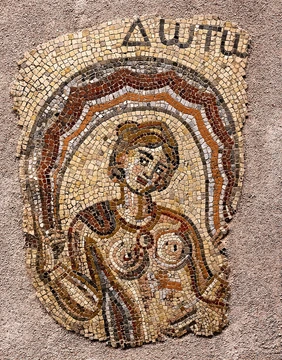
Aun
Mythical Swedish king who sacrificed nine sons to live longer.

Wikipedia / Wikimedia Commons
Aun the Old (also known as Aunn inn gamli, Auchun, or Edwin the Old) was a legendary Swedish king from the Yngling dynasty, as recorded in the *Heimskringla*. He was the son of King Jorund and fathered ten sons, nine of whom he reportedly sacrificed to extend his own lifespan. According to the Yngling line’s internal timeline, Aun likely died near the end of the fifth century, though some sources place him in the early sixth century. His son Egil Vendelcrow (also called Egill Vendilkráka) succeeded him; scholarly consensus identifies Ongentheow from the *Beowulf* story with Egil Vendelcrow, not Aun.
- died
- Late fifth century (or early sixth century, depending on the source)
Lore & Background
Aun ruled from his seat in Uppsala and was reputedly a wise king who made sacrifices to the gods, but he was not of a warlike disposition and preferred to live in peace. He was attacked and defeated by the Danish prince Halfdan, fleeing to the Geats in Västergötland, where he stayed for 25 years until Halfdan died in his bed in Uppsala. Upon Halfdan's death, Aun returned to Uppsala at age 60 and sacrificed his son to Odin, who promised he would live another 60 years. After 25 years, Aun was attacked by Ale the Strong, a king from Norway who was related to Halfdan by marriage (though the *Heimskringla* does not specify that he was Halfdan's brother-in-law), lost several battles, and fled again to Västergötland. Ale ruled Uppsala until killed by Starkad the Old; the *Heimskringla* does not specify that Ale ruled for exactly 25 years—that duration is associated with Aun's exiles, not Ale's reign.
Reader's Guide
Aun's significance lies in his role as a mythical Swedish king whose story illustrates themes of sacrifice, longevity, and the limits of royal power in Norse tradition. His repeated sacrifices of sons to Odin, each extending his life by a decade, culminated in his inability to sacrifice his tenth son due to Swedish refusal, leading to his death. The term 'Aun's sickness'—dying in bed of old age—entered the lore from his death. Aun's legacy is preserved in the Ynglingatal, Ynglinga saga (part of Heimskringla), and Historia Norwegiæ, and he is succeeded by his son Egil Vendelcrow, identified with Ongentheow of the Beowulf narrative. His story reflects the tension between divine favor and human cost, and his burial mound at Uppsala marks a key site in early Swedish legendary history.
Did You Know?
- Aun sacrificed nine of his ten sons to Odin to prolong his own life.
- After sacrificing his eighth son, Aun could no longer get out of his bed.
- The Swedes refused to allow Aun to sacrifice his tenth son, so he died.
- Dying in bed of old age was called 'Aun's sickness' after his death.
Frequently Asked Questions
Who is Aun in Swedish mythology?
Aun the Old (also called Aunn inn gamli, Auchun, or Edwin the Old) is a legendary king of the Yngling dynasty recorded in Snorri Sturluson's Heimskringla. He is described as a ruler based in Uppsala during the late fifth century, son of King Jorund and father of ten sons.
What is Aun's act of filicide?
Aun reportedly sacrificed nine of his ten sons to Odin in order to prolong his own life. This mass killing of his own children stands as one of the most extreme examples of filicide in Norse mythological literature.
Why did Aun kill his sons?
According to the Heimskringla, Aun offered nine of his sons as sacrifices to the god Odin specifically to extend his own lifespan. The act frames filicide as a transactional bargain with the divine, where a father trades his children for more years of life.
Who succeeded Aun as king?
His son Egil Vendelcrow (Egill Vendilkráka) took the throne after Aun's death in the late fifth century. Egil is traditionally identified with the figure Ongentheow from the Old English epic Beowulf and is placed in the early sixth century.
In which sources does Aun appear?
Aun is primarily found in the Heimskringla (specifically the Ynglinga saga) and in the Ynglingatal, a skaldic poem embedded within that text. Both place him as a ruler from Uppsala within the Yngling royal lineage.
More in Filicide in mythology 1-24
Spotted an error? Know more?
This is a living reference — every entry is fact-audited, and reader corrections feed straight into our audit queue. Suggest an edit · See this site's audit record