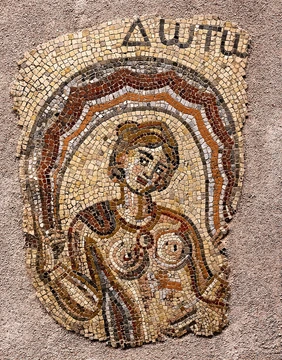
Corythus (son of Paris)
Trojan prince killed by his father or a collapsing roof.

Wikipedia / Wikimedia Commons
Corythus is a minor Trojan figure in Greek mythology, known as the son of Prince Paris of Troy. His parentage is disputed: he is either the son of Paris by the nymph Oenone or by the Spartan queen Helen. His story appears in accounts of the Trojan War, where his arrival in Troy leads to his death, either at the hands of his father or in a building collapse.
- born
- Troy (presumed)
- died
- Troy (during the Trojan War)
- field
- Mythology
- nationality
- Trojan
- known_for
- Son of Paris; killed by his father or in a roof collapse
Lore & Background
Corythus is the son of the Trojan prince Paris, either by his first wife Oenone or by his second wife Helen. As the son of Helen, he had four full-siblings: brothers Bunomus, Aganus and Idaeus, as well a sister named after her mother. According to most authors, Corythus was son of Oenone, Paris' previous wife before he deserted her for the love of Helen. The jealous and hurt Oenone sent Corythus out with instructions to stir trouble among the Trojans, planning ill for Helen and making Paris jealous. He was first sent by Oenone to inform the Greeks of the prophecies required to take Troy: a member of the Aeacidae, the bones of Pelops, and Heracles' arrows. Lycophron further references Corythus informing the invading army about the land, being a spy or traitor, alluding to a version in which the Greeks found Troy thanks to Corythus' information.
Reader's Guide
Corythus serves as a minor but illustrative figure in the Trojan War cycle, embodying themes of mistaken identity, familial tragedy, and the consequences of jealousy. His dual parentage—either as the son of Oenone or of Helen—reflects the fluidity of mythological traditions, where different authors offered competing versions. In the Oenone tradition, his role as a spy and unwitting rival to his father Paris highlights the destructive power of Oenone's vengeance, leading to Paris's fatal wound and eventual death. The alternative version, where he dies alongside his brothers under a collapsed roof, underscores the random violence of war. His story also connects to broader motifs of unwitting kinslaying, as seen in other myths like those of Telephus and Telegonus. Though not a major hero, Corythus's narrative enriches the tapestry of Trojan mythology by illustrating how even minor figures can drive pivotal events.
Did You Know?
- Corythus was reportedly even more good-looking than his father Paris.
- In one version, he was killed by his father Paris after being spotted in Helen's bedroom.
- He was sent by Oenone to inform the Greeks of prophecies needed to take Troy.
- According to Servius, Corythus founded a settlement in Italy named after himself.
Frequently Asked Questions
Who is Corythus (son of Paris)?
Corythus is a minor Trojan prince in Greek mythology, identified as the son of Paris. He appears in accounts surrounding the Trojan War, though his exact lineage is debated among ancient sources.
Who is Corythus's mother?
Ancient sources disagree on his parentage—some name the nymph Oenone as his mother, while others attribute him to Helen of Sparta. This ambiguity places him in a contested position within the Trojan royal family.
How does Corythus's story end?
When Corythus arrives in Troy, he meets a violent death: one tradition says his father Paris kills him, while another has him crushed when a building's roof collapses on him. Either way, his life is cut short during the Trojan War.
Why is Corythus important in mythology?
Though a minor figure, Corythus matters because his death—particularly the filicide version—adds a tragic layer to Paris's character and the broader Trojan War narrative. He also serves as a reminder of the collateral suffering among Trojan royalty during the conflict.
Where was Corythus born and where did he die?
Both his birth and death are placed in Troy. He is presumed to have been born there as a prince and met his end in the same city during the events of the Trojan War.
More in Filicide in mythology 1-24
Spotted an error? Know more?
This is a living reference — every entry is fact-audited, and reader corrections feed straight into our audit queue. Suggest an edit · See this site's audit record