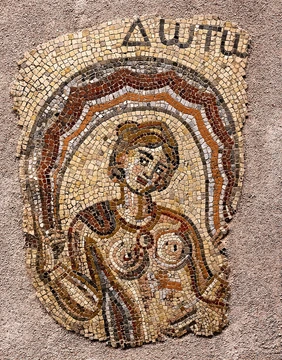
Clymenus
Multiple figures in Greek mythology share the name Clymenus.

Wikipedia / Wikimedia Commons
Clymenus is a name shared by multiple figures in Greek mythology, appearing in various genealogies and regional traditions. The most notable include a son of Phoroneus who founded a sanctuary of Demeter with his sister Chthonia; a son of Helios and king of Boeotia; a king of Orchomenus who was mortally wounded in a quarrel and whose son Erginus avenged him; and a king of Arcadia who committed incest with his daughter and later killed her. Other figures named Clymenus include a Calydonian prince, an Argonaut, a suitor of Penelope, and a title of Hades.
- field
- Greek mythology
- known_for
- Multiple mythological figures, including kings, princes, and a title of Hades
- nationality
- Greek
Lore & Background
Clymenus, son of Phoroneus by Cerdo, Teledice, or Cinna, founded a sanctuary of Demeter with his sister Chthonia. Another Clymenus, son of Helios and king of Boeotia, is in a variant genealogy the father of Phaëton and the Heliades by the Oceanid Merope. A third Clymenus, son of Cardys and descendant of Heracles of Ida, became king of Olympia but was deposed by Endymion, and founded the temple of Athena Cydonia in Phrixa, Elis.
Clymenus, a Calydonian prince son of Oeneus and Althaea, fell in battle between the Curetes and Calydonians alongside his brother Meleager. Another Clymenus, son of Presbon or Orchomenus, was king of Orchomenus; after being mortally wounded by a stone thrown by Perieres at a festival of Poseidon, he told his son Erginus to avenge him. Clymenus, king of Arcadia, son of Schoeneus or Teleus, committed incest with his daughter Harpalyce, ate his sons by her at a banquet, and killed her upon discovery.
Additional figures include Clymenus the Argonaut, brother of Iphiclus; a son of Aeolus of Lipara; a suitor of Penelope from Dulichium; the father of Eurydice, wife of Nestor; the father of Nyctimene who tried to rape her; and a title of Hades.
Reader's Guide
The multiple figures named Clymenus illustrate the complexity of Greek mythological tradition, where names recur across different regions and genealogies. These figures range from founders of sanctuaries and kings to participants in major myths such as the Calydonian boar hunt and the Argonautic expedition. The variant genealogies, such as the one where Clymenus is father of Phaëton instead of Helios, show how myths were adapted by different authors. The story of Clymenus of Arcadia, involving incest and cannibalism, reflects darker themes in Greek mythology. The use of Clymenus as a title for Hades indicates the name's association with the underworld. These figures collectively contribute to the rich tapestry of Greek mythological narratives, demonstrating how a single name could be attached to diverse characters across different myths and regions.
Did You Know?
- Clymenus, son of Phoroneus, founded a sanctuary of Demeter with his sister Chthonia.
- In a variant genealogy, Clymenus is the father of Phaëton and the Heliades by the Oceanid Merope.
- Clymenus, king of Arcadia, committed incest with his daughter Harpalyce and later killed her.
- Clymenus is also a title of Hades.
Frequently Asked Questions
Who is Clymenus in the context of mythological filicide?
Here, Clymenus refers to a king of Arcadia in Greek mythology. He is the figure who committed incest with his own daughter and then killed her, making him one of the few named parents in Greek myth who murdered a child.
What exactly happened between Clymenus and his daughter?
The Arcadian king engaged in an incestuous relationship with his daughter and subsequently took her life. The myth is typically cited as a stark example of a father violating and then destroying his own child.
How does Clymenus's story end?
The narrative concludes with Clymenus murdering his daughter after their illicit union. There is no recorded redemption or divine punishment in the surviving fragments; the act itself is the story's endpoint.
Why do fans bring up Clymenus when discussing filicide in mythology?
He is one of the very few explicitly named Greek figures who killed a child, and specifically a father who killed his daughter. His case is often grouped with other mythological parental murders to show how ancient storytellers framed extreme familial violence.
Is there only one Clymenus in Greek mythology?
No—the name belongs to several distinct characters, including a son of Phoroneus, a Boeotian king, a king of Orchomenus, a Calydonian prince, and even a title of Hades. The filicide association applies solely to the Arcadian king who killed his daughter.
More in Filicide in mythology 1-24
Spotted an error? Know more?
This is a living reference — every entry is fact-audited, and reader corrections feed straight into our audit queue. Suggest an edit · See this site's audit record