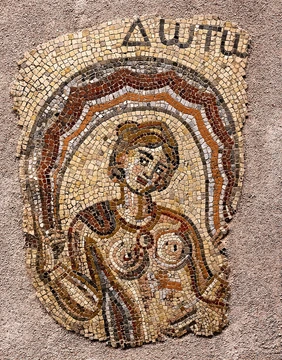
Eumelus
Multiple figures in myth and one early Greek poet.

Wikipedia / Wikimedia Commons
Eumelus (Ancient Greek: Εὔμηλος, meaning 'rich in sheep') is a name appearing multiple times in Greek mythology and history. In mythology, Eumelus is most notably the younger twin brother of Atlas in Plato's account of Atlantis, and also appears as a king of Pherae, a suitor of Helen, and a participant in the Trojan War. Historically, Eumelus of Corinth was an epic poet of the second half of the 8th century BC.
- name
- Eumelus
- meaning
- rich in sheep
- mythological_roles
- son of Poseidon and Cleito; king of Pherae; suitor of Helen; companion of Triptolemus; herald; companion of Aeneas; suitor of Penelope
- historical_figure
- Eumelus of Corinth, epic poet
- known_for
- being a twin of Atlas in Atlantis myth; leading forces in Trojan War; chariot race at Patroclus's funeral; being in the Trojan Horse
Lore & Background
In mythology, Eumelus (also called Gadeirus) was the younger twin brother of Atlas in Plato's myth of Atlantis. He was the son of Poseidon and Cleito, and his siblings included Ampheres, Evaemon, Mneseus, Autochthon, Elasippus, Mestor, Azaes, and Diaprepes. Poseidon divided the island of Atlantis into ten portions, each ruled by one of the ten brothers, with Atlas as the supreme ruler. Another Eumelus was the son of Merops and father of Byssa, Meropis, and Agron; this family offended Hermes and was transformed into birds. A different Eumelus was a companion of Triptolemus and father of Antheias, who died trying to ride Triptolemus's chariot; Eumelus then settled in Patrae and founded Antheia in his son's memory. Yet another Eumelus, son of Eugnotus, killed his own son Botres for eating the brains of a sacrificed sheep before it was placed on the altar.
Eumelus, son of Admetus and Alcestis, succeeded his father as king of Pherae. He married Iphthime, daughter of Icarius of Sparta, and possibly fathered Zeuxippus. As one of the suitors of Helen, he led forces from Pherae and Iolcus in the Trojan War on the Greek side. Though a skilled charioteer, he came fifth and last in the chariot races at Patroclus's funeral due to Athena's sabotage. He was also among the Greeks inside the Trojan Horse. Other mythological figures named Eumelus include a herald (also called Eumeles or Eumedes) who was father of Dolon and five daughters; a companion of Aeneas who reported the fleet fire in Sicily; and one of the suitors of Penelope from Same, killed by Odysseus with help from Eumaeus, Philoetius, and Telemachus.
Historically, Eumelus of Corinth was an epic poet active in the second half of the 8th century BC.
Reader's Guide
The name Eumelus appears across multiple distinct mythological figures and one historical poet, illustrating the common practice in ancient Greek tradition of reusing names for different characters. The most prominent mythological Eumelus is the twin of Atlas in Plato's Atlantis narrative, where he represents one of the ten original kings of the island. This version of Eumelus is significant for being part of Plato's philosophical allegory about an ideal society and its decline. The Eumelus who was king of Pherae and a suitor of Helen appears in Homeric tradition, notably in the Iliad, where his defeat in the chariot race due to divine interference highlights the role of the gods in human affairs. His inclusion in the Trojan Horse further cements his place in the epic cycle. The historical Eumelus of Corinth, though little is known of his works, represents the early development of Greek epic poetry in the 8th century BC, a period that saw the composition of the Homeric epics. The multiplicity of figures named Eumelus underscores the complexity of Greek mythological genealogies and the blending of local traditions.
Did You Know?
- Eumelus (Gadeirus) was the younger twin brother of Atlas in Plato's myth of Atlantis.
- Eumelus, son of Admetus and Alcestis, was one of the suitors of Helen and led forces from Pherae and Iolcus in the Trojan War.
- Eumelus was the fifth and last in the chariot races at Patroclus's funeral because of Athena's sabotage.
- Eumelus of Corinth was an epic poet of the second half of the 8th century BC.
Frequently Asked Questions
Who is Eumelus in Greek mythology?
Eumelus is a name shared by several figures in Greek myth, but the most prominent is the younger twin brother of Atlas, son of Poseidon and Cleito, in Plato's account of the lost island of Atlantis.
What does the name Eumelus mean?
The Ancient Greek name Εὔμηλος translates to 'rich in sheep,' a pastoral epithet that appears across multiple mythological bearers of the name.
What roles does Eumelus hold across different myths?
Depending on the source, Eumelus appears as a king of Pherae, a suitor of Helen, a companion of Triptolemus, a herald, a suitor of Penelope, and even a companion of Aeneas, making him one of the most name-recycled figures in the Greek corpus.
How does Eumelus feature in the Trojan War narrative?
He is credited with leading a contingent of forces, taking part in the chariot race held at Patroclus's funeral games, and being among those hidden inside the Trojan Horse.
Is there a real historical person named Eumelus?
Yes—Eumelus of Corinth was an epic poet active in the second half of the 8th century BC, and his existence is sometimes conflated with the mythological figures bearing the same name.
More in Filicide in mythology 1-24
Spotted an error? Know more?
This is a living reference — every entry is fact-audited, and reader corrections feed straight into our audit queue. Suggest an edit · See this site's audit record