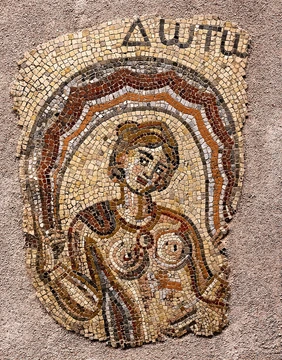
Procne
Athenian princess who became a nightingale after avenging her sister.
Procne (Ancient Greek: Πρόκνη, romanized: Próknē) is a minor figure in Greek and Roman mythology. She was an Athenian princess, the elder daughter of King Pandion of Athens, and was married to Tereus, the king of Thrace. Her story is best known as an origin myth for the nightingale, whose melodic song was believed to be a sad lament, and it centers on her revenge against Tereus for the rape and mutilation of her sister Philomela.
- born
- Athens (mythological)
- field
- Mythology
- nationality
- Greek
- known_for
- Revenge against Tereus by killing her son Itys; transformation into a nightingale or swallow
- family
- Daughter of Pandion I and Zeuxippe; sister of Philomela, Erechtheus, Butes, and possibly Teuthras; wife of Tereus; mother of Itys
Lore & Background
Philomela wove a tapestry revealing her fate and sent it to Procne. Disguised as a Bacchant, Procne rescued her sister. Seeking revenge, Procne killed her son Itys, and with Philomela's help, cooked and served him to Tereus. When Tereus realized what he had eaten, he pursued the sisters with a sword. The gods transformed all three into birds: Tereus became a hoopoe, and the sisters became a nightingale and a swallow, though Greek and Roman sources disagreed on which sister became which bird.
Reader's Guide
Procne's myth was likely codified in the fifth century BC in Sophocles' lost play *Tereus*, which eclipsed an earlier story about Aëdon. The tale became widely known in the post-classical era through Ovid's *Metamorphoses*, which influenced many artists and authors in the Western canon. The story serves as an origin myth for the nightingale's sorrowful song, and the transformation of the characters into birds reflects themes of grief, revenge, and metamorphosis. The myth also has a doublet in Aëdon, queen of Thebes, who similarly killed her son and became a nightingale. Later variations, such as those by Hyginus and Eustathius, altered details, but Ovid's version remained the most influential.
Did You Know?
- Procne's name derives from the ancient Greek word περκνός (perknós), meaning 'dark-spotted', also used for a species of eagle.
- In some versions, Tereus falsely reported Procne's death to Pandion and asked for Philomela's hand in marriage.
- A late antiquity scholiast, Pseudo-Nonnus, named Zeus as the god who transformed the characters into birds.
- Pausanias insisted the entire story took place in Daulis, not just the transformation.
More in Filicide in mythology 1-24
Spotted an error? Know more?
This is a living reference — every entry is fact-audited, and reader corrections feed straight into our audit queue. Suggest an edit · See this site's audit record