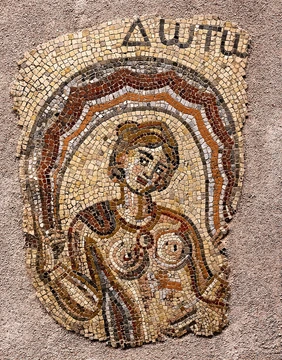
Poemander (mythology)
Founder of Tanagra who accidentally killed his own son.
Poemander was a figure in Greek mythology, the son of Chaeresilaus and Stratonice, and the founder of the city of Tanagra, which he named after his wife, the naiad Tanagra. He is known for his involvement in events surrounding the Trojan War and the accidental killing of his own son.
- father
- Chaeresilaus (son of Iasius)
- mother
- Stratonice
- spouse
- Tanagra (naiad, daughter of Aeolus or Asopus)
- children
- Leucippus and Ephippus (father of Acestor)
- known_for
- Founder of Tanagra (also called Poemandria); accidental killer of his son Leucippus
Lore & Background
Poemander was besieged by the Achaeans at a place called Stephon because he refused to support them in the Trojan War. He escaped at night and began fortifying Poemandria. The architect Polycritus mocked his fortifications by leaping over the ditch, and Poemander, enraged, threw a stone at him but missed and struck his own son Leucippus, who died from the injury.
Reader's Guide
Poemander's significance lies in his role as the mythical founder of Tanagra, a city in Boeotia, and in the tragic narrative of his accidental filicide. His story illustrates themes of unintended consequences and the need for ritual purification in Greek mythology. After killing Leucippus, Poemander was required by law to leave Boeotia, but his land had been invaded by the Achaeans, and his mother Stratonice was carried off by Achilles, who also killed his grandson Acestor. Ephippus, Poemander's surviving son, brought Achilles, Tlepolemus, and Peneleos to escort Poemander to Elephenor, who cleansed him for the murder. This episode reflects the complex interplay of family, war, and divine or heroic intervention in mythological narratives.
Did You Know?
- Poemander named the city Tanagra after his wife, the naiad Tanagra.
- He accidentally killed his son Leucippus while throwing a stone at the architect Polycritus.
- His mother Stratonice was carried off by Achilles.
- He was cleansed of the murder of Leucippus by Elephenor.
More in Filicide in mythology 1-24
Spotted an error? Know more?
This is a living reference — every entry is fact-audited, and reader corrections feed straight into our audit queue. Suggest an edit · See this site's audit record