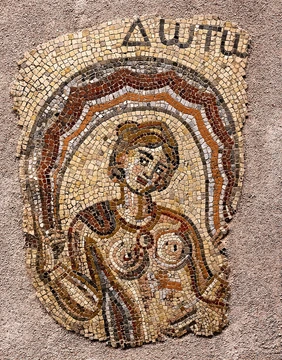
Jephthah's daughter
Unnamed daughter of Jephthah, central to a disputed biblical sacrifice.

Wikipedia / Wikimedia Commons
Jephthah's daughter, sometimes later referred to as Seila or Iphis, is a figure in the Hebrew Bible whose story is recounted in Judges 11. She is the unnamed only child of the Israelite judge Jephthah, who vowed to offer as a burnt offering the first thing that came out of his house after a military victory. Her story is significant for its depiction of filial piety and for the long-standing debate over whether she was actually sacrificed or instead lived in seclusion.
- known_for
- Subject of a biblical vow leading to her sacrifice or dedication; later named Seila or Iphis in tradition
- field
- Biblical narrative
- nationality
- Israelite
- mentioned_in
- Book of Judges, chapter 11
- father
- Jephthah the Gileadite
Lore & Background
Jephthah's daughter appears in Judges 11 after her father, the Israelite judge Jephthah, won a battle over the Ammonites. He had vowed to give the first thing that came out of his house as a burnt offering to God. His only child, an unnamed daughter, came out to meet him dancing and playing a tambourine. She encouraged Jephthah to fulfill his vow but asked for two months to weep for her virginity. After this period, Jephthah fulfilled his vow and offered up his daughter.
Reader's Guide
The story of Jephthah's daughter has been interpreted in sharply divergent ways. Historically, many Bible commentators—including Josephus, Pseudo-Philo, Augustine, and Jerome—held that Jephthah killed his daughter in an act of human sacrifice. Later scholars such as George F. Moore and John J. Collins support this sacrificial view. However, an opposing interpretation argues that she was 'offered to the LORD' in the same way Samuel was, spending the rest of her life in seclusion; proponents include Adam Clarke and Gleason Archer. In later influence, Pseudo-Philo gave her the name Seila, and Peter Abelard praised her as a model for monastic women. In feminist discourse, Phyllis Trible views her as an example of patriarchal violence, while J. Cheryl Exum notes her active submission to paternal authority. The story also inspired musical works and appears in Jewish exegesis under the name Tannot or Tanot.
Did You Know?
- Jephthah's daughter is sometimes later referred to as Seila or Iphis.
- In the twelfth century, Rabbi Judah the Pious wrote that the tekufah during the month of Tishre was observed because of Jephthah's daughter.
- The Order of the Eastern Star calls her 'Adah' and lists her as one of its five heroines, representing obedience to duty.
- The story inspired the classical saxophone piece 'Jephthah: Invocation & Dance for Soprano and Alto Saxophones and Piano' by Carl Anton Wirth.
More in Filicide in mythology 1-24
Spotted an error? Know more?
This is a living reference — every entry is fact-audited, and reader corrections feed straight into our audit queue. Suggest an edit · See this site's audit record